
1. The Living Christ– I’m grateful for the knowledge that I have that Jesus Christ is a resurrected, glorified person who knows me personally. He is my friend, my supporter, my advocate, my Savior. He lived. so that He could understand us, comfort us and offer us a path to overcome the world and return to live with Him and Heavenly Father once again. He still lives, and guides His church today.
2. The Plan of Salvation– There is a Primary song that says:
“My life is a gift; my life has a plan.
My life has a purpose in Heaven it began.
My choice was to come to this lovely home on earth
And seek for God’s light to direct me from birth.
I will follow God’s plan for me,
Holding fast to his word and his love.
I will work, and I will pray; I will always walk in his way.
The I will be happy on earth And in my home above.”
“I Will Follow God’s Plan,” Children’s Songbook, 164
I’m grateful to know the measure and purpose of my life. I feel comfort in knowing that God knew me personally, that He was my Father before I even came to this earth. I know that I came to receive an earthly body and to test my faith away from my heavenly home. I know that if I do the best I can in this life; working and praying to always find myself in God’s light, I’ll be able to return and live with Him again when my earthly life is over.
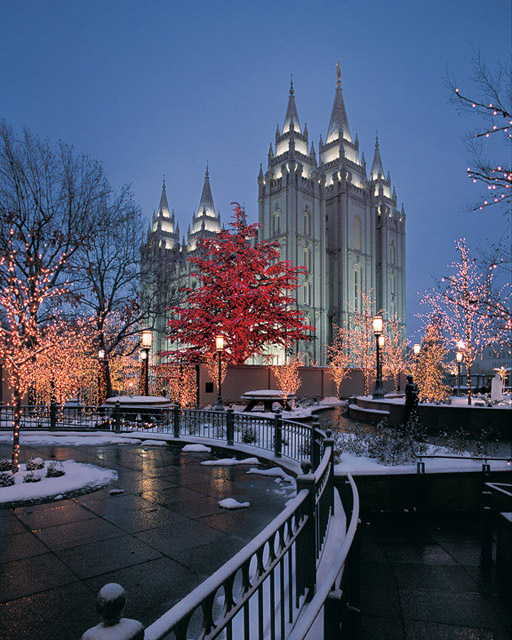
3. Temples– It is a blessing and a privilege to hold myself worthy to enter the house of the Lord. As Moses was instructed to take off his shoes before walking on holy ground where the Lord tread upon this earth, I consider it a blessing to shake off sin that would keep me from the Lord’s presence. The temple is literally His house: holy ground where His spirit can be closest to His children. I walk inside, leave the world behind and find His love and peace waiting for me there.
4. Families are Forever– I love my family. I love every minute I spend with them. Well, almost. I love the fact that we were placed together in a family unit by choice and heavenly design. I love that we can learn and grow together, love and support each other. Most of all, I love that they will always be my family.
5. Prophets– I love the wonderful spirit that surrounds the modern day Prophet and Apostles. I’m grateful to know that they are diligently trying to lead me back to my Heavenly Father. I’m even more grateful to know that they in turn are led by Heavenly Father.
6. The Word of Wisdom– To many, it may seem extreme or binding to have a health code as part of a religion. To me, however, it makes perfect sense. Why wouldn’t the creator of our bodies give us guidelines for how best to keep them healthy and properly respected? I find comfort in knowing that no matter how the trends of the world may sway as to what is healthy and what is not, I am not relying in the arm of the flesh for my answers. Rather, I am placing my faith in my creator. I have also found that abiding by these simple guidelines for health I am mentally and spiritually more open to the will of the Lord and His love for me in every aspect of my life.
7. Programs- I’m grateful for the programs of the church. They are specifically designed to meet my needs as a daughter of God and to meet the needs of the other members of my family. I love Primary, where my children learn how precious they are to Heavenly Father and how to “Choose the Right”. I love the youth programs that focus on values and how to set goals that will lead our teenagers into great men and women. I love Relief Society that encourages me to be who I am and helps me serve and love those I come in contact with.
8. Truth– I’m grateful for my testimony. That I feel comfortable, welcome and whole within The Church of Jesus Christ of Latter-day Saints. It does not leave holes of doubt and unanswered questions. Its gospel speaks truth to my soul and fills me with light. It is where I belong and where Christ has asked me to be.
9. Repentance– I am grateful for the atonement. For the chance that I have to try a little harder each day to be a little better. I’m grateful for Christ’s love that wipes the slate clean when I humbly come to Him with my mistakes. I’m grateful for the loving promptings of the Holy Ghost that keep me mindful of my promise to serve Christ as His disciple every day of my life.
10. Peace– When you combine the many blessings I experience from living the Gospel of Jesus Christ as a member of The Church of Jesus Christ of Latter-day Saints, I have a foundation that gives me peace in my every day life. It gives me perspective and comfort in times of trial. It gives me joy.

