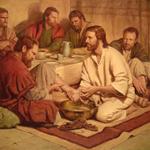
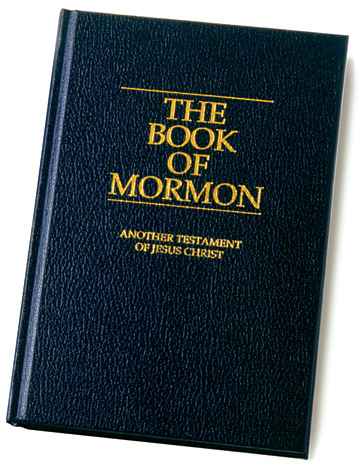
Teach Your Children the Bible This Summer
School may be out, but there is no reason for the learning to stop. While religious education might be against the law in public schools, at home this summer, you can teach your children to love the scriptures, and maybe sneak in a little academic learning at the same time. Read more
Remembering to Do Right
Most of us want to do the right thing and to keep God’s commandments. However, in the press of everyday life, with rushed schedules, pressure from others, and conflicting desires, it can be difficult to make good choices, or even to remember to do the right thing.
One way to help resolve this problem is to surround ourselves with reminders of who we are and what we stand for. By having our world filled with symbols of our faith, we can stay focused on the eternal goal, even when the immediate demands of life are crowding in.
Mormon children are given a ring to wear on their finger that contains a shield with the letters CTR on it. The lett
ers stand for Choose the Right, and children are taught to look at their ring when they make a decision. If they develop the habit of doing this and remembering what the ring is telling them, in time, it can become a habit, so they’ll make the right choice even without a ring handy. However, even many adults wear CTR rings, because it never hurts to be reminded.
Mormons are counseled to place in their homes items that will remind them of their Savior. Gospel art work is one way to keep minds and hearts focused on God. Having a few inexpensive pictures in your home can help you to contemplate how you use your time when you’re at home. Place the pictures in the places you spend the most time or in the spaces that might create the most temptation. The artwork need not be expensive. I often purchase calendars with religious art, and then frame the pictures I like best when the year ends.
Mormons can also ask the leaders of auxiliary organizations to let them know when they’re planning to throw out old picture packets because too many of the pictures are lost. These often have farmable pictures in them.
LDS.org offers an inexpensive new gospel art book, as well. For only a few dollars, you can receive many colored pictures in a spiral binder. These can be placed on an easel, allowing you to change the picture often.
Keeping the scriptures in easily accessible places can also serve as a reminder to read them and to honor what is contained inside. During times when I expect it to be easy to get distracted, I place my Bible and Book of Mormon on my keyboard before going to bed. Since I am a writer and spend my days at my computer, this served as a clear reminder to me to read before I began my work for the morning.
I also have a framed quote on my desk about how God expects us to use our talents to serve Him. I copied it into a word processing program, and put a light picture behind it. Then I printed it off and framed it. Because it sits right where I work, it reminds me to write appropriately, and not to be tempted by popular culture to write something I should not.
Sometimes the greater challenge comes when we leave our home. This is one reason so many Mormons wear CTR rings. However, any type of religious jewelry can serve the same purpose, but only if you desire to do the right thing anyway. A ring is simply not enough to keep you from doing wrong if you’re determined to do the right thing.
The most important way to remember to do right is to live worthy of help from the Holy Ghost. The Holy Ghost can’t be in unclean environments, so we must be attempting to do the right thing. When we’re tempted to make a poor choice, the Holy Ghost or Spirit of Christ can remind us of the promises we’ve made to God and give us the courage to carry them out. However, it’s then our responsibility to act on that prompting. If we ignore it and continue the sin, the Holy Ghost must flee and we’re left alone to cope with the results.
“The gift of the Holy Ghost, given to us when we are confirmed, gives us the ability to discern the difference between the giving ways of the kingdom of God and the taking practices of the world. The Holy Ghost gives us the strength and courage to conduct our lives in the ways of the kingdom of God and is the source of our testimony of the Father and the Son. As we obey the will of our Father in Heaven, this priceless gift of the Holy Ghost will be with us continually.
We need the Holy Ghost as our constant companion to help us make better choices in the decisions that confront us daily. Our young men and women are bombarded with ugly things of the world. Companionship with the Spirit will give them the strength to resist evil and, when necessary, repent and return to the strait and narrow path. None of us are immune from the temptations of the adversary. We all need the fortification available through the Holy Ghost. Mothers and fathers should prayerfully invite the Holy Spirit to dwell in their dedicated homes. Having the gift of the Holy Ghost helps family members make wise choices-choices that will help them return with their families to their Father in Heaven and His Son, Jesus Christ, to live with Them eternally.” (See Robert D. Hales, “The Covenant of Baptism: To Be in the Kingdom and of the Kingdom,” Ensign, Nov 2000, 6-9.)
The most important part of the process is to develop the desire to do right and the faith to know that what God has asked of us is always the best choice. Once that is in place, the other tools will help us to follow through with what we have chosen to do.
In time, obedience becomes easier. If we decide only once, rather than every time we’re in a decision-making setting, we are more likely to make the right choice. For instance, when I’m offered alcohol, I don’t have to stop and decide what to do. I made my choice when I was ten years old, long before I was LDS. It’s not a temptation, and it’s no longer a decision-it’s an automatic reaction. I simply say no without any thought at all. This takes time, but the more our faith grows, the more decisions will begin to be automatic for us.
Why Mormons Have Callings
Filed under: Discipleship: Following in the Savior's Footsteps, Service
Because the Church of Jesus Christ of Latter-day Saints, whose members are sometimes called Mormons, is a lay church, everyone is asked to help with the work to be done. Each willing member is given at least one calling. A calling is often referred to as a ministry in other religions. Read more
The Mormon Channel
Filed under: Internet, Recommended Sites, Reviews of Church Related Sites and Blogs, Technology and the LDS Home, The Internet for the LDS Teen
The Mormon Channel is a new around-the-clock radio station from the Church of Jesus Christ of Latter-day Saints, sometimes called Mormons. This is an official station currently available on the Internet and on HDRadio in areas that carry Bonneville broadcasts. An I-Phone app is also in the approval process. Podcasts are available for download. Read more
Reading the Book of Mormon to Learn Virtue
Filed under: Book of Mormon, Jesus Christ, Young Women
Recently, we’ve been studying how the Mormons are teaching their teenagers to live a virtuous life. The girls-and in some areas, the boys-work to achieve goals in a number of areas known as values. The newest value is virtue. As part of completing the Virtue Value, the teenagers are asked to read the entire Book of Mormon. Read more
Return to Virtue: Repentance
Young LDS women across the globe are calling for a return to virtue. They understand they will not be perfect every day, as they strive to emulate the Savior, Jesus Christ, but they also have the reassurance of being able to repent of their sins. Read more
Secular and Spiritual Learning
Mormons have long been supporters of education, both secular and spiritual. Joseph Smith organized adult education schools to further both his own learning, since he’d had little schooling, and the learning of others. Mormon pioneers opened schools even before they were completely settled into Utah. Today, Brigham Young University is recognized as a quality school. Education is a key factor in the Mormon faith.
However, while counseling its members to get all the education they can, both formal and self-directed education, they counsel them to keep their priorities in order.
In the Bible, Jesus commanded his followers to seek first the kingdom of God (Matthew 6:33) This suggests an appropriate pattern for our learning: First learn spiritual things, and then learn secular things. This doesn’t mean we have to put off secular learning until we’ve mastered the gospel. It means to make sure we don’t neglect our spiritual educations while achieving our secular education. When we have a firm foundation in spiritual knowledge, we are better able to discern truth from falsehood in our secular studies.
Henry B. Eyring taught: “Our first priority should go to spiritual learning. For us, reading the scriptures would come
before reading history books. Prayer would come before memorizing those Spanish verbs. A temple recommend would be worth more than standing first in our graduating class. But it is also clear that spiritual learning would not replace our drive for secular learning.
The Lord clearly values what you will find in that history book. And He favors not only Spanish verbs but also the study of geography. His educational charter requires that we have “a knowledge also of countries and of kingdoms” (D&C 88:79). There is also an endorsement for questions we study in the sciences. It is clear that putting spiritual learning first does not relieve us from learning secular things. On the contrary, it gives our secular learning purpose and motivates us to work harder at it.
To keep spiritual learning in its proper place, we will have to make some hard choices of how we use our time. But there should never be a conscious choice to let the spiritual become secondary. Never. That will lead to tragedy. Remember, you are interested in education, not just for mortal life but for eternal life. When you see that reality clearly, you will put spiritual learning first and yet not slight the secular learning. In fact, you will work harder at your secular learning than you would without that spiritual vision”
Mormon beliefs assure us we can take with us when we die what is in our hearts and what is in our minds. The knowledge we gain today will go with us into our eternal lives, and this should influence what knowledge we choose to gain. Knowledge that will help others live better lives on earth and knowledge that will be valuable in heaven are likely to be the most valuable types of education. Hours spent memorizing batting averages probably has very little value in either life, but finding out how to save a life in an emergency has great value in our earthly life. Memorizing scriptures will serve us both here and in heaven.
A secular education is important in furthering the Mormon teachings of self-reliance. Education in childhood, whether gained through a traditional school or a homeschool (the church is neutral on homeschooling) prepares a child for adulthood and college. A formal college education gives a person the credentials society currently requires to obtain good employment and can increase the likelihood of a family being able to support itself and of being able to earn enough money that the mother in a two-parent home will be able to remain home with the children.
Mormons are encouraged to create a habit of life-long learning in both secular and spiritual matters. It’s important, therefore, to teach children how to be self-directed learners.
When my children were young homeschoolers, they overheard a woman complaining that she’d always wanted to learn history, but couldn’t because she couldn’t go to school right now. On our way home, they asked, completely baffled, why the woman thought you could only learn history in a school. They were learning history right at home. Whether or not a child is homeschooled, they must learn how to learn. They should be filled with joy at the thought of learning something, not for a grade, or candy, or a reward, but for the pure joy of learning. If they don’t get this at school, they must get it at home. Help them find fun educational books to enjoy in their spare time, carry out science experiments that don’t “count” and memorize poetry. Then, whether or not their lives are currently allowing them to attend school, their adult lives will be filled with learning.
It can be challenging, in a busy life, to find time for learning. Often, goal oriented people will push aside spiritual learning to make more time to learn what they need for school or work. Mormons often study their scriptures first thing in the morning, before the challenges of the day begin to intrude. This literally puts spiritual learning first. During the course of a day, they might put on a talk by a church leader to listen to as they do housework, or read a spiritual book during lunch.
Secular learning can also be fit into a busy day. A poem taped over the sink can be memorized while the dishes are washed. A book on tape can educate during the morning commute. An ordinary conversation can provide an introduction to a new topic. When you meet someone new, find out what they know best and begin asking questions. Most people love to talk about their passions and a fifteen minute conversation can educate you in an entirely new field.
Periodically evaluate the types of learning you are doing. Are you achieving a balance? If you’re spending six hours a day on secular learning, it is wise to include more than fifteen minutes of spiritual learning into the day. Is there a way to blend the spiritual and the secular? For instance, when I taught my children ancient history during our homeschool, we combined it with Old Testament reading and the two types of learning complemented each other and increased our learning in both the secular and the spiritual. Someone studying medicine in college might supplement that with God’s teachings on health. A mother who is immersing herself in child development books might also read articles by church leaders on parenting. The two types of learning do not have to be placed into separate boxes and isolated from each other. Blend the two and achieve a richer and fuller education.
Prepare Now to Enter the Temple
In our continuing series on the new Virtue value program for the Young Women in the Mormon Church, we today focus on the requirement to prepare to go to the temple. Many people wonder about Mormon temples and what happens inside them. What are young girls expected to do to prepare to attend?
The third requirement in the Virtue value is for girls to prepare to attend the temple when they’re grown. As teenagers, they can enter one portion of the temple to participate in a special part of it relating to baptism, but they cannot yet go into the other portions or participate in the other ordinances. However, this is a time of preparation.
Temples are very different from the church’s regular houses of worship. Regular meetinghouses are open to the public and Sunday services are held there. Temples are not used for weekly worship services and are open only to those who have prepared themselves for the experience.
What goes on there isn’t secret, but it is sacred. Sacred things are not to be lightly discussed and are difficult to understand without the proper background. Church members must be adults to attend, with limited exceptions as mentioned above, and must have been a member of the church for at least one year. Through personal interviews, they demonstrate their ability to live the gospel at a high level.
Gordon B. Hinckley, a previous president of the church explained temples this way:
The work that goes on in these buildings sets forth God’s eternal purposes with reference to man-God’s child and creation. For the most part, temple work is concerned with the family, with each of us as members of God’s eternal family and with each of us as members of earthly families. It is concerned with the sanctity and eternal nature of the marriage covenant and family relationships.
It affirms that each man and woman born into the world is a child of God, endowed with something of His divine nature. The repetition of these basic and fundamental teachings has a salutary effect upon those who receive them, for as the doctrine is enunciated in language both beautiful and impressive, the participant comes to realize that since every man and woman is a child of Heavenly Father, then each is a member of a divine family; hence, every person is his brother or sister. (Why These Temples? by President Gordon B. Hinckley)
Another part of the temple activity is the making of high level covenants. While members of the church who have
been baptized have already promised God they will do these things, which largely involve responsibility to the family, they now promise to keep them at a higher level and to accept greater penalty from God if they’re violated. Marriages are also performed there, and those married in this way are married for eternity, not until death.
Because the promises made are very serious covenants, a person must be living to a standard that makes it likely he can honor the covenants completely. This takes time and preparation. It also requires a certain level of knowledge.
A person who decides to major in physics will not begin his study in the highest level class meant for graduate students. It’s likely he will begin with a survey class which introduces the important concepts. This is comparable to taking the discussions led by the missionaries for those considering joining the church or who have recently joined. Then he will take more detailed classes, but still containing more introductory material. This is comparable to the Gospel Essentials course, a Sunday School class for new members of the church. It is only after considerable study and time spent in a lab actually doing what the student has learned that he will be admitted to the higher level classes. These classes will presume you come to them with a solid foundation in the basics and know how to carry out responsible experiments. A church member will come to the temple with a high level of gospel knowledge and considerable experience living the commandments of God. He is now ready to take on more challenging commitments and to understand more detailed instruction on the basic principles.
To help the teenagers prepare, they are asked, as part of completing the Virtue Value requirements, to read from the book of Alma, a part of the Book of Mormon. Chapter five teaches readers how to be saved. The girls are asked to note the questions Alma asked those who were listening to his sermon and to apply them to their own lives. This helps them to do a personal evaluation of their own level of obedience to God’s commandments and to set goals for increasing their love and obedience.
Alma asks the following questions:
14 And now behold, I ask of you, my brethren of the church, have ye spiritually been born of God? Have ye received his image in your countenances? Have ye experienced this mighty change in your hearts?
15 Do ye exercise faith in the redemption of him who created you? Do you look forward with an eye of faith, and view this mortal body raised in immortality, and this corruption raised in incorruption, to stand before God to be judged according to the deeds which have been done in the mortal body?
16 I say unto you, can you imagine to yourselves that ye hear the voice of the Lord, saying unto you, in that day: Come unto me ye blessed, for behold, your works have been the works of righteousness upon the face of the earth?
The Bible teaches “Not every one that saith unto me, Lord, Lord, shall enter into the kingdom of heaven; but he that doeth the will of my Father which is in heaven.” (Matthew 7:21, KJV of the Bible) As the girls increase their ability to live the gospel, they demonstrate the depth of their love for God. Good works alone can’t save them; they must be done out of love for God and Jesus Christ, and are therefore a reflection of that love and their commitment to God.
Following their study, the girls are asked to set personal goals that will help them improve how they live their lives. By studying for themselves, selecting their own goals, and working out how to accomplish them, they prepare themselves for adulthood. They make a personal commitment to follow God’s teachings and this strengthens their testimonies and their faithfulness.