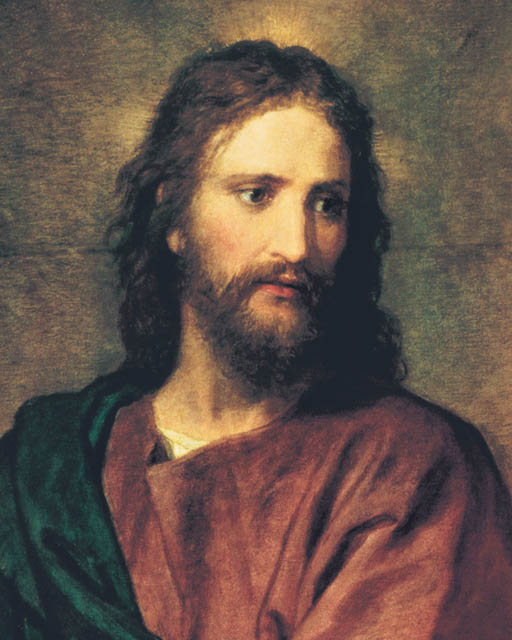
Do We Need Prophets Today?
Filed under: Basic Beliefs of Mormons, Gospel Principles, Practices & Precepts
Have you ever played the children’s game of telephone? In this game, children line up. The child at the start of the line whispers something to the person next to him. That person whispers what he heard—or thought he heard—to the next person. The game continues until the last person has heard the sentence. He announces what he heard and nearly always, it has little or no relationship to the original sentence. The message got scrambled in the excitement of the game.
When Adam was created, he spoke directly with God, and was the first prophet. God taught Adam the gospel in its fullness. When Adam died, a new prophet took his place in the role. Practices changed over the years, but not truth. God instigated preparatory practices when His children were unable to live the higher laws. He taught the gospel line upon line as people were ready for it. Some took on other beliefs however, and it was not many generations before other religions developed. Read more
Mormon-Speak: Brother and Sister
If you visit a Mormon meeting, you might be surprised to have a complete stranger walk up to you and address you as Brother or Sister, followed by your last name once it’s known. No, it’s not a way of quickly building up their genealogy—it’s an expression of their religious faith and their commitment to the Savior’s teachings. Read more
What Do Mormons Believe About Tithing?
Filed under: Basic Beliefs of Mormons, Gospel Principles, Practices & Precepts
Tithing is the payment of ten percent of your income to God. Mormon beliefs state that everything we have comes as a gift from God, and despite this, He asks that we return only ten percent to Him. The rest may be used for any moral purpose we choose. For Mormons, it is a sacred obligation to pay tithing as a way of recognizing God’s hand in our lives and of showing gratitude for His gifts. Read more
The Influence of Righteous Women
Dieter F. Uchtdorf recently wrote of the influence women can have over their families and others. (Dieter F. Uchtdorf, “The Influence of Righteous Women,” Liahona, Sep 2009, 2–7) President Uchtdorf said:
As we look at the history of this earth and at the history of the restored Church of Jesus Christ, it becomes obvious that women hold a special place in our Father’s plan for the eternal happiness and well-being of His children.
I hope that my dear sisters throughout the world—grandmothers, mothers, aunts, and friends—never underestimate the power of their influence for good, especially in the lives of our precious children and youth! Read more
Parable of the Talents
Filed under: Bible, Finding Happiness, Jesus Christ, New Testament, Teachings of Christ, The Bible
In the New Testament, Jesus told a parable of a man who, about to leave on a trip, gave each of his servants some talents (coins) to have stewardship over. Each received a different amount. Most of them used the talents in such a way as to increase the value of the stewardship by the time the master returned. However, the person who had received the smallest number of talents—only one—hid his in the ground to protect it, rather than working to make it worth more than it was worth originally.
Even though the man had only one talent, and others had as many as five, he was expected to make good use of that talent and to expand its value, rather than to bury it where it couldn’t help anyone.
Today, we often look around and see that others have far more talent than we do. When our talents don’t seem as many, we might feel less valued by God. When our talents are less great, we might wonder if it’s even worth doing anything with them.
Mormon beliefs teach that our talents are gifts from God. The number we’re given, or even the extent of them, really isn’t the point of the talents. They were given to us to do something with, and if we use them well, they will have value and even increase.
I’m an author. I didn’t write something publishable the first time I sat down to write. It took many years of writing badly written stories, articles, and books—beginning when I was only six years old—before I wrote something anyone was willing to publish. I received a large stack of rejection letters over the years before I received the first acceptance letter, and still receive rejections today, even after publishing a book that got good reviews.
My books will never be best sellers. I simply don’t have that kind of talent. Does that mean I shouldn’t write? Of course not. What I write may not make history, but it has helped a few people, and so has value. I’ve improved my ability to write over the years, and since I can live forever through the atonement, I expect I will improve a great deal in the next few million years. However, I can’t wait for the next life to get started; mproving my talents is one of my earthly assignments.
Sometimes we misjudge how talent and success work. I decided many years ago to return to school and take a math class, because I wanted to better help my children with their math. I’d always been awful at math, and was extremely frightened to take this class. However, I ended up getting straight A’s in every test, the first A’s I had ever received in math. A student who was not doing well noted my grade on the posted grade sheet and complained it wasn’t fair that I got A’s. He said it was easy for me because I was naturally good at math. I explained my history of math failures. My grades weren’t the result of talent; they were the result of hard work. We were required to do every other odd numbered problem. I did every problem, often three or four times. I worked a few weeks ahead of the class in case I got stuck and I received one-on-one help from the professor almost weekly by making use of office hours. I even cornered a professor or two I wasn’t taking classes from when I was really desperate.
Talent can help us to be successful, but hard work is also critical. I may never be a math genius, because my brain isn’t configured for that type of thinking. My talent in math was miniscule, but hard work made up some of the difference. Even with great talent, work is critical.
Of course, hard work can’t turn you into a genius in every case. Anyone who has heard me singing to my toddlers in the church nursery knows I’m never going to be a great singer, but even though singing might not be my talent, I can still sing, at least to toddlers who don’t care. I used to worry a lot about what I wasn’t good at. However, as I’ve gotten older, I’ve stopped worrying about this so much and I’ve begun to focus on what I can do, or might be able to do if I really worked at it.
When I felt overwhelmed about writing a book, a friend pointed out that if I wrote only one page a day, I’d have a book in a year. I only had to focus on my one little page. Many of us are very busy and don’t feel we have much time for talents. However, if we give that talent even fifteen minutes of our time each day, we will be working toward something that will be ready for our greater attention in a few years, when we have more time.
The Savior, Jesus Christ, instructed us to make wise use of every gift God has given us. If we take even our tiniest talents and work at them, turning to God for help, we can magnify them and thereby honor the giver of the gift. The parable of the talents was given to us to remind us to make use of our God-given gifts to become the person God knows we can be.
What is an “ExMormon”?
Simply put, an ExMormon or Ex-Mormon is a person who used to be a member of The Church of Jesus Christ of Latter-day Saints (Mormon Church), but is no longer. However, the term has a connotation of rebellion. Some people who were once affiliated with the Church have simply drifted away and become inactive. They’ve established lifestyles that don’t include Mormon worship. Most of these people do not call themselves ExMormons.
Others have encountered a problem with the Church. This encounter can take several forms: 1) The member has been offended by someone in the local congregation. Since the Church has a lay priesthood, and everyone serves in temporary callings, the offender might have been in a leadership position. The person offended blames the Church and estranges himself. 2) The member begins to live in such a way that his/her behavior is against church standards. This can include drinking or smoking, engaging in gambling or watching pornography, or engaging in sexual sin. The member has two choices — he can go through a process of repentance and reconcile with the Church; or he can abandon the Church and follow the chosen lifestyle. If the former member finds fault with the Church, it can give him an excuse to give in to the chosen lifestyle. 3) The member contrives a philosophy that is contrary to Mormon Doctrine. At this point, nothing happens. A person can believe whatever he wants and still be a member in full fellowship in the Mormon Church. But if the person decides that the Church should change to suit him, and he begins to crusade to that effect, he can be excommunicated as an apostate.
The Mormon Church is different than all other churches in that it is led by a prophet of God. Its doctrines come from Christ through revelation. So its policies can only be changed by the Lord Himself. If a member feels that he knows best what doctrine and policy should be, he should find another church or create his own. Excommunication is meant to be part of the process of repentance, and church leaders are supposed to constantly nurture an excommunicated member towards reconciliation with God and the Church. But some excommunicated members have no desire for reconciliation. They would rather go their own way.
At this point, some ExMormons become anti-Mormon. Much information about the Church that comes from ExMormons is blatantly false and meant to destroy the Church, or at least defame it. In the time the Prophet Joseph Smith was alive, ExMormons spread vile, false claims that brought bitter persecution against church members, to the extent that many lost property and some lost their lives. Joseph Smith said this:
“There is a superior intelligence bestowed upon such as obey the Gospel with full purpose of heart, which, if sinned against, the apostate is left naked and destitute of the Spirit of God, and he is, in truth, nigh unto cursing, and his end is to be burned. When once that light which was in them is taken from them they become as much darkened as they were previously enlightened, and then, no marvel, if all their power should be enlisted against the truth, and they, Judas-like, seek the destruction of those who were their greatest benefactors” (Teachings of Presidents of the Church: Joseph Smith, p321).
Thus, if a person outside the Church wants information about Mormons, it is best not to seek it from an ExMormon. The television series Big Love uses an ExMormon as its “expert,” and that is why so many falsehoods are perpetrated on the show. The biggest is that Mormons practice polygamy. Mormons do not, and have not since 1890. Any Mormon attempting to practice polygamy is excommunicated from the Church. (To read about more errors in the program, click here.) Anyone wanting information about Mormons and the Mormon Church should inquire of a member in full fellowship.