This is not an official site of The Church of Jesus Christ of Latter-day Saints

Subscribe to LDS BlogsRSS FeedSubscribe to LDS BlogsComments


Teaching Toddlers the Gospel of Jesus Christ

Each week, I teach one to three year olds about God, Jesus, and the Bible in my Mormon nursery class. Every month,

32

we learn a Bible story, repeating it each Sunday for the entire month, and we also have a lesson on a basic principle of Christianity. Over the past year, I’ve learned a great deal about teaching religion to very young children.

It’s never too soon to start teaching our children. As a family, we can read the scriptures and make sure even our youngest children are in the room as we do. They are listening and will absorb whatever they are ready for. Read more

  • Share/Bookmark

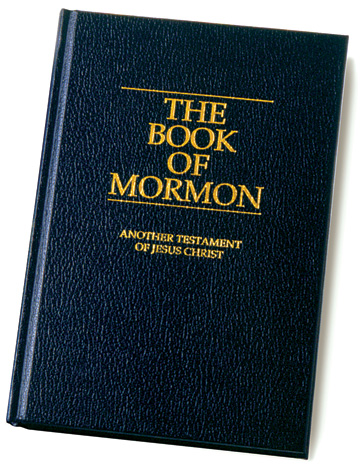
Should Mormons Offer Physical Proof of the Book of Mormon?

When people attempt to argue Mormonism, they usually begin with some commentary on proof. They want proof—physical, tangible, and scientific—that it is true. When science or history discovers something that might help to “prove” an aspect of Mormonism, Mormons are generally interested, but these things don’t strengthen their testimonies. They are merely interesting.

While this might irritate some Christians, it must be remembered that much of the Bible can’t be proven, either. Science has repeatedly refused to acknowledge the possibility of God, whose existence cannot be scientifically proven. Nor has science proven the Creation. We can’t fit some historical stories into the known political leadership of the time. We don’t have the bones of Adam and Eve. We haven’t found the ark, or proven the entire world once flooded at once. There are creatures mentioned in the Bible we haven’t been able to prove just yet—no dragons or unicorns have emerged during archaeological expeditions.

Does this shake the faith of the average Christian? Of course not. Faith is not about proof. If it can be proven, it doesn’t require faith. The Bible is filled with admonitions to have faith, not to have proof.

Paul gave a powerful sermon on faith in Hebrews, chapter 11 (King James version of the Bible): “Now faith is the substance of things hoped for, the evidence of things not seen. He reminds us of many Biblical heroes who lived their lives based on faith, not proof. Noah didn’t ask for proof of an impending flood before building the ark, Paul said, nor did Abraham ask for proof before moving to a new land or taking Isaac to be sacrificed. They trusted God and their own testimonies and acted without any proof at all that these things were necessary.

Faith is an essential element of religion. Mormons teach that faith is one of the primary reasons God sent us here to earth. Could we learn to believe in Him and trust Him when He isn’t right here, in our sight? We believed we could and agreed to come to earth to gain faith, to be tested, and to obtain families and bodies.

Most Christians accept a responsibility to develop faith in Jesus Christ, and to agree to accept Him as our Savior without any physical proof of His existence. We don’t know where He is buried. There are no official records recording His life. He never wrote a word that we have on hand, and no one painted His picture or sculpted His likeness. We don’t know what He looked like. We can only make assumptions based on historical knowledge of the time and place in which He lived, and we must trust the recorded words of others as to His existence and teachings. And yet, with all this lack of physical proof, billions of people have believed in Jesus Christ and modeled their lives on His teachings.

Mormons, like other Christians, know that testimony isn’t about physical proof. It is about learning to know and to trust God. Testimony is about faith, which is a higher law than proof. Faith is an eternal-life-giving law.

Christians, including Mormons, know that faith is a verb. A passive faith is not really faith. When we know that putting our hands into a fire will burn them, we don’t put our hands into the fire. We act on those things we truly know. Faith, then, must be an active faith. It isn’t enough to say we believe God has taught us not to kill, for instance. We must also act on that belief. A true Christian keeps the commandments of God as evidence of His faith. Just as Noah didn’t ask for proof, neither do Christians ask for proof before deciding to live the gospel of Jesus Christ.

While it is possible to keep the commandments without faith, it is not possible to have true faith and refuse to keep the commandments. No one is perfect, but a person with faith is constantly striving to live as Jesus taught. James taught,“  14 What doth it profit, my brethren, though a man say he hath faith, and have not works? can faith save him?

  15 If a brother or sister be naked, and destitute of daily food,

  16 And one of you say unto them, Depart in peace, be ye warmed and filled; notwithstanding ye give them not those things which are needful to the body; what doth it profit?

   17 Even so faith, if it hath not works, is dead, being alone.

  18 Yea, a man may say, Thou hast faith, and I have works: shew me thy faith without thy works, and I will shew thee my faith by my works. (James 2)

These verses do not mean we can be saved by works done without faith, but simply for show. It means that a person who believes in and loves God will keep His commandments as a natural part of that love and faith.

Christians, including Mormons, keep the commandments even though they lack physical proof that rewards will come, either in this life or the next. For them, faith is enough to inspire a Christian lifestyle.

Faith in Jesus Christ and a testimony of Him and His universal Atonement is not just a doctrine with great theological value. Such faith is a universal gift, glorious for all cultural regions of this earth, irrespective of race, color, language, nationality, or socioeconomic circumstance. The powers of reason may be used to try to understand this gift, but those who feel its effects most deeply are those who are willing to accept its blessings, which come from a pure and clean life of following the path of true repentance and living the commandments of God” (Dieter F. Uchtdorf, “Precious Fruits of the First Vision,” Ensign, Feb 2009, 4–8).

Physical proof that Mormonism is true is no more essential to a Mormon than is physical proof of God, Jesus, or the Bible to any other Christian. Faith and testimony isn’t brought about by proof, but by a personal knowledge of God, and the willingness to turn to Him as the source of all truth. Science is constantly changing its mind about proof, but God never changes His mind. It comes down to this question: Who is our God—God, or science? Mormons, while respecting the role of science, choose God.

  • Share/Bookmark

Why Do Mormons Obey Their Prophet?

Mormonism is often known as a strict religion with many rules. Mormons are often asked why they obey and why they let others decide how they should live.

3408

It is helpful to understand a little about the role of the Mormon prophet and how Mormons view him. With this knowledge, it is easier to understand why Mormons are willing to follow a prophet.

Students of the Bible are familiar with the concept of prophets. In Old Testament times, God called men to be prophets to deliver God’s word to the people. While each person is able to pray to God privately and learn His word, it would be very complicated to pray about each possible doctrine individually. God also has messages for us we might not think to pray for. A prophet serves as a channel for all the information a person needs to live according to God’s plan. In a world in which many prominent people are willing to guess at God’s word, and to teach their personal beliefs as scripture, a prophet is a sure source of information. Christians want to be certain they are living as Jesus taught, and not as someone else has decided they should live.

Adam was the first prophet on earth, speaking directly to God to learn truth and to find out what God wanted Him to do. Other prophets soon followed. Of course, there have been times when God withdrew prophecy because the people refused to listen or to honor the prophets, but He has always restored them. Prophets were on the earth to prepare the people for the first coming of Christ, and as we approach the second coming, we naturally need prophets again. For this reason, God restored prophets to the earth in modern times. The second coming requires as much preparation as did the first coming.

But how do the Mormons know their prophet really is the prophet God has chosen for this time? Mormons are taught from early childhood, and, if they are considering becoming Mormon, to ask God who the prophet is. They are instructed not to take the word of anyone on earth—not the Church’s word, not that of their parents, not that of their teachers. All of those sources are a place to be taught the gospel, but no one can give another person a testimony. A testimony can come only from God through confirmation from the Holy Ghost.

“If any of you lack wisdom, let him ask of God, that giveth to all men liberally, and upbraideth not; and it shall be given him,” taught James, believed by many scholars to be the half-brother of Jesus. (See James 1:5) Each person is entitled to turn to God for wisdom and to find out for Himself, from the only source that is completely trustworthy, that the head of the Mormon church is indeed God’s prophet. Prior to baptism, prospective members are interviewed and asked if they have taken this step.

Once a member has gained a testimony of the prophet, they can trust His teachings. However, should they at any time feel uneasy about something, they can again return to God to pray about it. This is why Mormons who have taken the time to pray about their choices are unshakable. They gained their testimonies directly from God.

Some outsiders will warn their members not to pray about which church to join, or about the prophets, because they claim the petitioner won’t know who is answering. Mormons, however, trust God. Because God promised in the Bible that we could ask Him anything and receive an answer, we trust Him to keep that promise. We know God can do anything, including answering us in a way we can recognize as coming from Him. The better we know God, and the more time we spend talking to Him and “listening” to Him, the more familiar His “voice” will become to us. Of course, prayer answers seldom come through a voice, so this is a symbolic way of speaking. It means we can recognize the ways he communicates with us, and understand how to know what the answer is. Mormons ask God because they believe Him when He makes promises.

Learn how to recognize answers to prayers.

Having an understanding of the process followed by Mormons to learn whether or not God speaks to us through prophets as well as individually, you are ready to understand why Mormons are willing to take direction from this prophet. You may already understand it, if you are a person who always strives to do what God wants you to do.

Mormons are taught the gospel of Jesus Christ as it is revealed in the scriptures. These scriptures include both the Old and New Testaments, as well as scriptures revealed through prophets in modern times, including the Book of Mormon and also as it is revealed to the prophets.

These scriptures teach us both the penalties for ignoring God and the blessings that come from obedience. We’ve seen throughout history that fear of punishment is not enough to make people obey God. Noah relentlessly taught the gospel to the people, and warned them of the upcoming flood. Despite this, they chose to ignore his warnings and continue in their sins. Why did they do this? Some probably didn’t believe Noah. Others thought it couldn’t happen to them. Most disobeyed simply because they did not love God more than they loved their sins.

Although Mormons are taught the consequences of disobedience, they don’t focus on them. Instead, they are taught to obey out of love for God. “If ye love me, keep my commandments,” Jesus taught. (See John 14:15) Love should always be the reason for obedience. Obedience that grows out of love for God is sincere and powerful. It is easier to keep the commandments for One we love, and the greater our love, the greater our obedience. Obedience that comes from fear or from a mere sense of obligation seldom lasts and does not produce all the blessings of obedience done from the heart. Obeying from love enlarges our spirit, increases our testimony, and helps us to become a better person. It allows us to become more like Jesus Christ.

 A previous Mormon prophet, Ezra Taft Benson, taught, “When obedience ceases to be an irritant and becomes our quest, in that moment God will endow us with power.” (See Elder Donald L. Staheli Of the Seventy CES Fireside for Young Adults on 2 March 2003.)

  • Share/Bookmark