Mary Fielding Smith: Mormon Pioneer
Filed under: Adversity, Mormon Women's History, Priesthood, Women of the Church
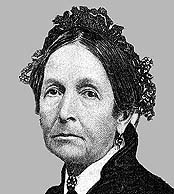
Mary Fielding Smith was the wife of Hyrum Smith. Hyrum was the brother of Joseph Smith, the first prophet of The Church of Jesus Christ of Latter-day Saints, whose members are sometimes nicknamed Mormons. The brothers were murdered at a young age, leaving behind young wives and children.
Mary Fielding Smith did not let the trials she had already faced, or those she would face in the future as a widowed mother in a church under constant threat of persecution and death slow her down or destroy her faith. She accepted that other people would be able to cause troubles for her she couldn’t control, and she might be among a hated group, but she could could still take control of much of her life. Like so many pioneer women, she showed extraordinary courage and faith through even the most challenging times. Read more
Eliza R. Snow: Poet, Leader, and Activist
Filed under: History of Music, Mormon Women's History, Women, Women of the Church
Eliza R. Snow was a pioneer, an early president of the Relief Society (an organization for Mormon women), president of Deseret Hospital, president of the Women’s Department of the Endowment House, and an author. She is considered one of the great women in Mormon history.
While many people pictured Mormon pioneer women as meek and mild, no one ever accused Eliza of such. She repeatedly protested this mischaracterization. One month before the Utah legislature returned to Utah women the suffrage they had lost when they gained statehood, she said: Read more
Curious About What’s in the Book of Mormon?
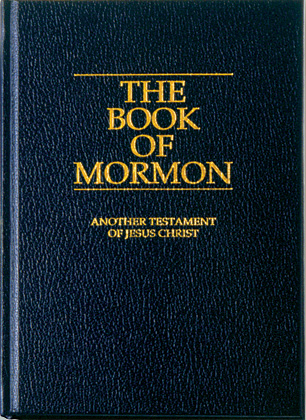
You’ve probably heard rumors and gossip about the Book of Mormon but the only way to know what is really in it is to read it. Many people who have finally taken the time to do so have been surprised to realize it isn’t what they were told it was. They’re startled by the emphasis on Jesus Christ, the discussions of grace, and the correlations to the Bible. There is no certainty the person telling you what is in it is telling the truth. In fact, there is no certainty he has read it. Only by reading it yourself will you know what is really in it.
There are many ways to read the Book of Mormon and I’ve read it myself in a variety of ways. One way to read is to read it as a story. Like the Bible, the Book of Mormon has a story. The stories in the Book of Mormon serve the same purpose as those in the Bible—to teach moral and spiritual lessons. I’ve known many people who are not Mormon and who enjoyed reading the Book of Mormon as literature and this can be an interesting way to get started. Read more
Parenthood as a Career
Filed under: Contentment in Motherhood, Parents/Leaders
Most of us spend a great many hours improving our job skills. We study the latest technology, management trends, or industry leaders. However, many of the same people who work hard to stay on top of their careers will complain that parenthood is unchallenging. Some parents who stay at home with their children all day fuss that their minds are turning to mush and some parents who are employed spend far less time focusing on making parenthood intellectually challenging than they do on their “paid” jobs. For too many, parenthood is just something we do after our real jobs end each day. Read more
What is Your Birthright Worth?
Filed under: Becoming More Christlike, Discipleship: Following in the Savior's Footsteps, Leading a Balanced Life, Obedience
The Old Testament tells of twins, Jacob and Esau. Esau was the oldest, and according to Jewish custom, was entitled to the birthright blessing. However, one day Esau came home very hungry to find Jacob had made pottage, which is a stew. He asked Jacob for some and Jacob agreed, but only if Esau would give him the birthright in exchange. Esau, not understanding the importance of the birthright, really wasn’t that interested in it. He cared more about his immediate physical needs than in God’s plan for him or in his eternal life. He happily sold his birthright for a mess of pottage, a term that has come to mean something worthless. Later, of course, when he matured and understood what he had given up, he was sorry he’d done so. The pleasure of the stew was long gone and he had nothing to show for it, while Jacob’s birthright had eternal blessings attached.
While most of us find it silly that someone would sell his eternal blessings for stew, many of us sell off God’s blessings for things of even lesser importance than stew. Each time we choose to violate a commandment, we are choosing to sell our birthright.
Our birthright is to receive all of God’s promised blessings for our lives on earth and to have the life He hopes we will have. In eternity, our birthright is to return to God to live forever. When Jesus lived on the earth, He consistently warned people they must keep the commandments if they wished to be with God after their deaths.
Not every one that saith unto me, Lord, Lord, shall enter into the kingdom of heaven; but he that doeth the will of my Father which is in heaven. (See Matthew 7:21.)
Each time we make a choice, we are prioritizing our values. If we decide to disobey a commandment, we’ve put that particular sin above the commandment in our priorities. We’ve decided the sin is worth more than the blessings associated with the commandment—in other words, we’ve sold our birthright for something that has only temporary benefit.
Mormons teach that we are expected to live a health code known as the Word of Wisdom. Sometimes a person will say, “I can’t believe God will keep me out of Heaven just because of a cup of coffee.” They are turning the problem around of course. What they should say is, “I can’t believe I’m willing to give up Heaven over a cup of coffee.” The same reasoning can be said of any sin we decide we value more than we value an eternity in God’s presence. When Jesus was on the earth, a young man asked Him how He could follow Jesus. Jesus reminded him of the commandments, but the man said he’d been doing all those things since he was a child. In response, Jesus offered Him another commandment: that of giving up all his worldly possessions. The man went away sadly. This he wasn’t willing to do. He preferred to sell his birthright for a fancy home or some other possessions. He had great possessions, and he had decided they were worth more to him than eternity.
Sometimes the mistaken priorities we set aren’t sins; they’re simply less important than the place we give them on our life scale. Many people put their careers or politics higher on their priority list than they do God. If being a Christian might damage their rise up the ladder to fame and fortune, they keep it a secret from those who know them. Some might decide they need the extra money they’ll earn working on Sunday more than they need the blessings that come from keeping the Sabbath Day holy. (We’re talking here about elective work, not essential work, or having no choice in the matter.)
When Jesus visited the home of Mary and Martha, Martha was terribly anxious about putting a good meal on the table for Jesus. It is without question important to give our best to Jesus, but when she complained about Mary, who was, instead of helping, letting Jesus teach her, Jesus helped Martha put her priorities in order. He gently told her that even though what Martha was doing was good, it was not the most important thing she could be doing at that moment. Jesus didn’t care about a fancy meal; He did care about teaching Mary and Martha the gospel. At another time, doing the housework might be the best use of Martha’s time, but at that particular moment, learning the gospel was the most important part. What was a feast at one time became a mere mess of pottage at this particular moment.
Take a few hours to look at how you plan and use your time. You’ll find that even though you are very busy, you always find time for the things you put first in your life. The challenge then is to make sure the first things go first. You have to be at work at a certain time and stay until a certain time, so although work may not be the most important thing in your world, it is the priority during that time. But do you really have to put in the many hours of overtime that keep you from your family or prevent you from doing God’s work? Do you need to earn as much money as you’re earning, or would it allow you to use your time in a more eternally important way if you turned down the next promotion or accepted less of the optional overtime?
What about your hobbies? There is nothing wrong with relaxing, but where do your hobbies fit into your priority scale? Is there a way to relax and to do something good at the same time? Could you develop a new hobby that also serves a purpose—perhaps gardening or teaching someone to read? What would happen if you decided to replace the morning newspaper with a half hour of scripture reading?
Each time we make a choice that puts something else over the teachings of God, or the priorities He wants you to have at this moment, we’re selling our birthright. Is what you’re getting worth what you’re giving up to get it?
Which gets your loyalty—pottage or eternity?