Making Personal Covenants With God

Mormons are a covenant-making people. When they are baptized, they covenant that they are willing to take on the name of Jesus Christ and to keep the commandments. In the temple, as adults, they make additional covenants with God, promising to keep the commandments at an even higher level.

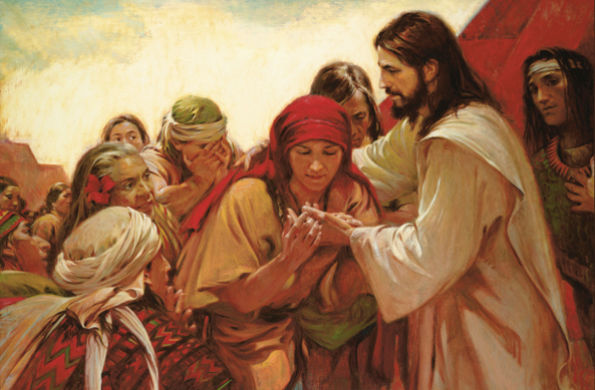
Baptism is the first formal covenant Mormons make.

Baptism is the first formal covenant Mormons make.

A covenant is a two-way promise between God and man. God sets the terms, but if we keep our part of it, God will always keep his part. They’ve been a part of God’s relationship with mankind from the earliest days. The Old Testament is filled with stories of covenants God made with His people and the results that came about when people chose to obey or disobey the covenant.

You don’t have to be Mormon to make a covenant with God. Throughout the Bible, we find many places where God has asked us to do something and told us what He will do for us if we obey. As you read the Bible, begin marking those verses and recording them in a notebook. Be sure to record both the commandment and the promise. Then, as you pray, make a personal covenant with God to honor His request. Read more

True Worship

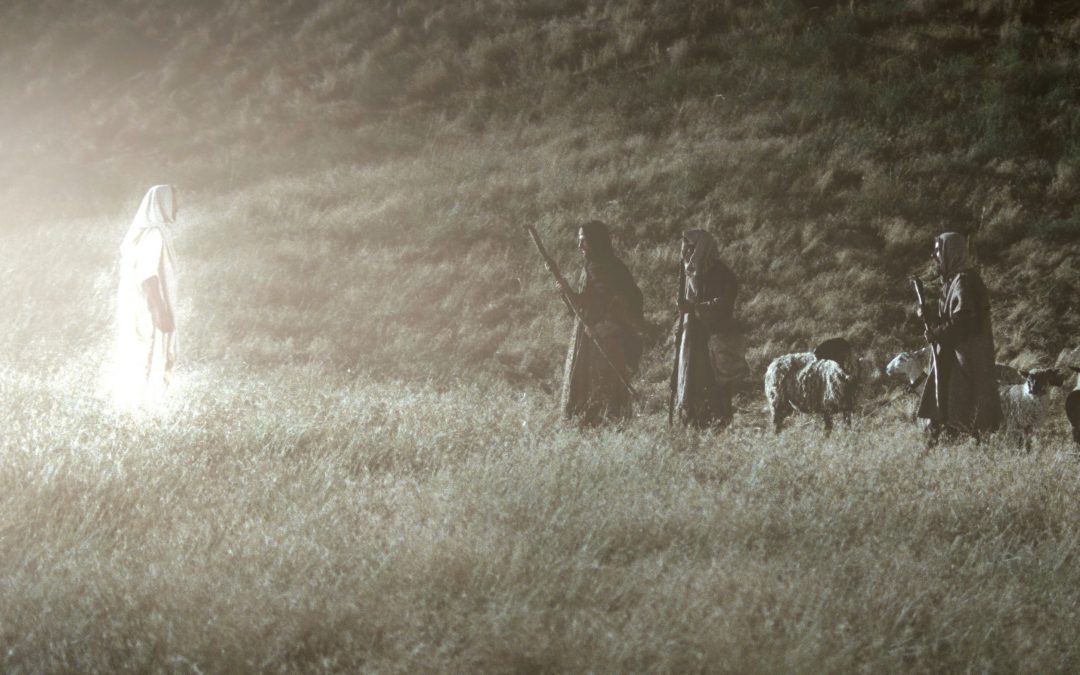
In the Book of Mormon, a missionary named Alma went with others to preach to a group of people called the Zoramites. This was an apostate group that had formed around a leader named Zoram. Alma and his missionary companions were shocked by what they saw when they visited the “worship” service of these people. They’d never seen anything like it and they felt sick at what they observed. Read more

The Atonement is Personal

Jesus died for us personally

Jusus' atonement was for us personally.

This article contains many quotes from religious leaders and scriptures. Following the links in the credits will take you to the complete reference, where you can learn more on this eternally significant topic.

The atonement was made for everyone, but perhaps most importantly, it was made for you personally. If only one person had needed the atonement, Jesus Christ would have accepted that responsibility. The sins he took on were not consolidated. He experienced every sin individually, and so the atonement was for you because Jesus loves you that much.

“His Atonement does indeed cover the world and all people from the beginning to the end. Let us not forget, however, that in its comprehensiveness and completeness it is also intensely personal and uniquely crafted to fit perfectly and address perfectly each of our own individual circumstances. The Father and the Son know each of us better than we know ourselves and have prepared an Atonement for us that is fully congruent with our needs, challenges, and possibilities,” (Cecil O. Samuelson Jr., “What Does the Atonement Mean to You?,” Liahona, Apr 2009, 14–19.) Read more

The Atonement of Jesus Christ

When Jesus Christ went into the Garden of Gethsemane, He embarked on one of the most powerful experiences in human history. As He took on our sins, He suffered extraordinary pain. It was an experience that was essential for our own salvation but also one essential for His own calling in life. By experiencing the pain of sin, He became able, despite having never sinned Himself, to completely understand what we go through when we sin. This makes Him uniquely qualified to be our Savior and judge. What we’ve experienced, He has also experienced. In this article, and the one that follows, we will explore the nature of the atonement and what it means for us personally.

The atonement was a personal gift from Jesus Christ Mormon

The Atonement is Personal

Atonement is a gift of love. Nephi, in the Book of Mormon, said, “But behold, the Lord hath redeemed my soul from hell; I have beheld his glory, and I am encircled about eternally in the arms of his love, (2 Nephi 1:15) Doesn’t that scripture help you understand the extraordinary gift of atonement? Picturing ourselves encircled in the arms of Jesus’ love is what the atonement does for us, and it’s why the atonement was done at all. Read more

The Spiritual Gift of Faith in Jesus Christ

Have you ever seen a mustard seed? It is extremely tiny, but Jesus taught us that if we have even faith the size of a mustard seed we can do miracles.

When Jesus was asked why He had been able to cast out devils from a child when His disciples had not, He answered, “If ye have faith as a grain of mustard seed, ye shall say unto this mountain, Remove hence to yonder place; and it shall remove; and nothing shall be impossible unto you  (Matthew 17:20, King James Translation of the Bible.) Read more

Spiritual Gift of Prophecy

In 1 Corinthians 12:10, we learn that one spiritual gift God gives to some people is the gift of prophecy. A spiritual gift is given to people in order to do God’s work and to bless others, and must not be used for personal gain. The gift comes through the Holy Ghost to those who are worthy and obedient to God’s commandments.

Although the Mormon church is headed by a prophet, the gift of prophecy referred to here is not referring to that prophet. The office of the prophet is held by the president of the Mormons. Only one person holds that office, but many people can have the gift of prophecy. Read more

Improving Your Bible Study

It is very important to read the Bible every day, but sometimes we can find ourselves in checklist mode—read the number of chapters on our to-do list efficiently, cross them off our list, and move on to the next item on the list. While this does ensure we will read the scriptures daily, it doesn’t really serve much purpose. Reading the Bible is a commandment because God wants us to learn more about Him, to ponder what is inside, and to apply the lessons to ourselves. They help us develop a closer relationship with Jesus Christ and to build our testimony. Read more

Should Mormons Offer Physical Proof of the Book of Mormon?

When people attempt to argue Mormonism, they usually begin with some commentary on proof. They want proof—physical, tangible, and scientific—that it is true. When science or history discovers something that might help to “prove” an aspect of Mormonism, Mormons are generally interested, but these things don’t strengthen their testimonies. They are merely interesting.

The Book of MormonWhile this might irritate some Christians, it must be remembered that much of the Bible can’t be proven, either. Science has repeatedly refused to acknowledge the possibility of God, whose existence cannot be scientifically proven. Nor has science proven the Creation. We can’t fit some historical stories into the known political leadership of the time. We don’t have the bones of Adam and Eve. We haven’t found the ark, or proven the entire world once flooded at once. There are creatures mentioned in the Bible we haven’t been able to prove just yet—no dragons or unicorns have emerged during archaeological expeditions.

Does this shake the faith of the average Christian? Of course not. Faith is not about proof. If it can be proven, it doesn’t require faith. The Bible is filled with admonitions to have faith, not to have proof.

Paul gave a powerful sermon on faith in Hebrews, chapter 11 (King James version of the Bible): “Now faith is the substance of things hoped for, the evidence of things not seen. He reminds us of many Biblical heroes who lived their lives based on faith, not proof. Noah didn’t ask for proof of an impending flood before building the ark, Paul said, nor did Abraham ask for proof before moving to a new land or taking Isaac to be sacrificed. They trusted God and their own testimonies and acted without any proof at all that these things were necessary.

Faith is an essential element of religion. Mormons teach that faith is one of the primary reasons God sent us here to earth. Could we learn to believe in Him and trust Him when He isn’t right here, in our sight? We believed we could and agreed to come to earth to gain faith, to be tested, and to obtain families and bodies.

Most Christians accept a responsibility to develop faith in Jesus Christ, and to agree to accept Him as our Savior without any physical proof of His existence. We don’t know where He is buried. There are no official records recording His life. He never wrote a word that we have on hand, and no one painted His picture or sculpted His likeness. We don’t know what He looked like. We can only make assumptions based on historical knowledge of the time and place in which He lived, and we must trust the recorded words of others as to His existence and teachings. And yet, with all this lack of physical proof, billions of people have believed in Jesus Christ and modeled their lives on His teachings.

Mormons, like other Christians, know that testimony isn’t about physical proof. It is about learning to know and to trust God. Testimony is about faith, which is a higher law than proof. Faith is an eternal-life-giving law.

Christians, including Mormons, know that faith is a verb. A passive faith is not really faith. When we know that putting our hands into a fire will burn them, we don’t put our hands into the fire. We act on those things we truly know. Faith, then, must be an active faith. It isn’t enough to say we believe God has taught us not to kill, for instance. We must also act on that belief. A true Christian keeps the commandments of God as evidence of His faith. Just as Noah didn’t ask for proof, neither do Christians ask for proof before deciding to live the gospel of Jesus Christ.

While it is possible to keep the commandments without faith, it is not possible to have true faith and refuse to keep the commandments. No one is perfect, but a person with faith is constantly striving to live as Jesus taught. James taught,“  14 What doth it profit, my brethren, though a man say he hath faith, and have not works? can faith save him?

15 If a brother or sister be naked, and destitute of daily food,

16 And one of you say unto them, Depart in peace, be ye warmed and filled; notwithstanding ye give them not those things which are needful to the body; what doth it profit?

17 Even so faith, if it hath not works, is dead, being alone.

18 Yea, a man may say, Thou hast faith, and I have works: shew me thy faith without thy works, and I will shew thee my faith by my works. (James 2)

These verses do not mean we can be saved by works done without faith, but simply for show. It means that a person who believes in and loves God will keep His commandments as a natural part of that love and faith.

Christians, including Mormons, keep the commandments even though they lack physical proof that rewards will come, either in this life or the next. For them, faith is enough to inspire a Christian lifestyle.

Faith in Jesus Christ and a testimony of Him and His universal Atonement is not just a doctrine with great theological value. Such faith is a universal gift, glorious for all cultural regions of this earth, irrespective of race, color, language, nationality, or socioeconomic circumstance. The powers of reason may be used to try to understand this gift, but those who feel its effects most deeply are those who are willing to accept its blessings, which come from a pure and clean life of following the path of true repentance and living the commandments of God” (Dieter F. Uchtdorf, “Precious Fruits of the First Vision,” Ensign, Feb 2009, 4–8).

Physical proof that Mormonism is true is no more essential to a Mormon than is physical proof of God, Jesus, or the Bible to any other Christian. Faith and testimony isn’t brought about by proof, but by a personal knowledge of God, and the willingness to turn to Him as the source of all truth. Science is constantly changing its mind about proof, but God never changes His mind. It comes down to this question: Who is our God—God, or science? Mormons, while respecting the role of science, choose God.

Achieving True Reverence

Robert C. Oakes, who served as a member of the Seventy (a high level position in the Mormon Church) for many years recently wrote about the subject of reverence, suggesting it is not just a topic for children. Reverence is an important part of worship for all followers of Christ. Read more

Gratitude as a Path to Happiness

November 11, 2009 by Terrie Lynn Bittner · Leave a Comment
Filed under: Blessings, Finding Happiness 

In difficult economic times, it might seem hard to make a Thanksgiving list of things we’re grateful for. However, no matter what our circumstances, there are always things to add to our list.

Mormon Awesome WonderWe are children of a loving Father in Heaven. That is the first item to place on any list. The second is that His Son, Jesus Christ, loved us enough to die for us. These two blessings can serve as the foundation for all other blessings on our list. Some things cannot be taken from us, no matter how little income we have or how few our possessions. Read more

Next Page »